

 Valorant

Buying in-game currency has become standard practice for millions of gamers worldwide. Whether you’re trying to skip the grind, grab limited-edition skins, or stay competitive, currency purchases offer a shortcut that saves time and unlocks content faster.
In 2025, the biggest games for currency buying span mobile giants like Honor of Kings and Roblox, battle royale titans like Fortnite and PUBG Mobile, and gacha heavyweights like Genshin Impact. These titles dominate because they combine massive player bases with economies where currency directly impacts progression, cosmetics, or competitive advantage.
This guide covers which games see the highest currency purchases, what makes them worth spending on, typical costs, and how to buy safely without getting scammed or banned.
What does “buying in-game currency” mean in 2025?
In-game currency refers to virtual money you use within a game to buy items, cosmetics, upgrades, or gameplay boosts. Common examples include V-Bucks in Fortnite, Robux in Roblox, Primogems in Genshin Impact, or Gold in World of Warcraft.
You can buy currency directly from the game developer or through third-party marketplaces. The practice has exploded as more games adopt free-to-play models with premium currencies, and mobile gaming continues dominating global revenue.
In 2025, cross-platform play and digital economies have made currency buying more accessible than ever. What started as a PC gaming thing has become mainstream across mobile, console, and cloud gaming platforms.
How we determined which games drive the most in-game currency purchases
When measuring the “most popular” games for buying in-game currency, raw player numbers don’t tell the whole story. Some games attract millions of players but generate little direct spending, while others with smaller audiences drive massive revenue through high-value transactions and repeat purchases.
To identify the games where in-game currency purchases are most significant in 2025, three key factors were taken into account:
-
Player base and activity level – A large, active audience increases potential transaction volume.
-
Monetization model and conversion rate – How aggressively a game integrates premium currency into progression, cosmetics, or power systems.
-
Revenue per active payer (ARPPU) – The average amount a paying player spends each month, reflecting spending intensity.
Games with strong economies — frequent updates, limited-time content, and social pressure to collect or compete — consistently rank higher than titles that rely on one-time cosmetic sales. Mobile gacha systems, in particular, dominate due to their built-in repeat-purchase mechanics.
Top 10 most popular games for buying in-game currency (2025)
The most popular games for currency purchases span mobile, PC, and console. What makes a game popular for currency buying comes down to massive player bases, frequent content updates, and economies where currency directly impacts progression or status.
1. Genshin Impact
Platform: Mobile, PC, Console
Currency: Primogems, Genesis Crystals
Genshin Impact tops the list not for sheer revenue, but for spending intensity per user. Despite generating about US $710 million in 2024 (Business of Apps), every cent flows through its currency system — players must buy or convert Primogems to access gacha pulls. Fewer players spend, but those who do spend far more, often US $70–100 per month.
Lifetime mobile revenue in China alone has surpassed US$5 billion (GameWorldObserver), showing how tightly its economy is bound to currency purchases rather than cosmetics.

2. Honor of Kings
Platform: Mobile
Currency: Tokens, Vouchers
Tencent’s flagship MOBA consistently drives massive currency spending despite being largely limited to Asia. With over 100 million daily players and ≈ US $2.6 billion in mobile revenue for 2024 (PocketGamer/AppMagic), Honor of Kings thrives on repeat cosmetic purchases and battle-pass renewals.
The combination of competitive play, social visibility, and esports events creates strong incentives for players to invest in seasonal Tokens and Vouchers. Its large paying base and high frequency of purchases justify its #2 ranking.
3. PUBG Mobile / BGMI
Platform: Mobile
Currency: UC (Unknown Cash)
PUBG Mobile remains one of the most lucrative mobile titles globally, earning roughly US $1.18 billion in 2024 (Mobile Marketing Reads).
The key factor behind its high placement is steady spending volume across a massive regional audience — players regularly top up UC for Royale Pass tiers, weapon skins, and collaborations. Regional pricing makes UC accessible, but cumulative spending across millions of players yields exceptional total volume, even if average spend per user is moderate.
4. EA Sports FC (Ultimate Team)
Platform: Console, PC, Mobile
Currency: FC Points
The Ultimate Team ecosystem continues to drive some of the most consistent recurring purchases in gaming. While total revenue per title is lower than top mobile hits, conversion rates are extremely high — a large share of players buy FC Points for card packs and tournaments each season. FIFA 2023 reportedly earned ≈ US $1.6 billion from Ultimate Team alone (Game Developer), and spending patterns remain stable under the new FC branding. Its economy ranks high for both intensity and consistency.
5. Roblox
Platform: PC, Mobile, Console
Currency: Robux
Roblox ranks high for total transaction volume rather than ARPU. The platform generated US $3.6 billion in 2024 (+29 % YoY) (Macrotrends) from millions of small Robux transactions.
Average monthly spending per paying user is around US $24 (WNHUB), but sheer scale — 79 million DAU and billions of user-generated experiences — puts its total currency activity among the highest in gaming. High frequency, low ticket value explains its #5 rank.
6. Fortnite
Platform: All Platforms
Currency: V-Bucks
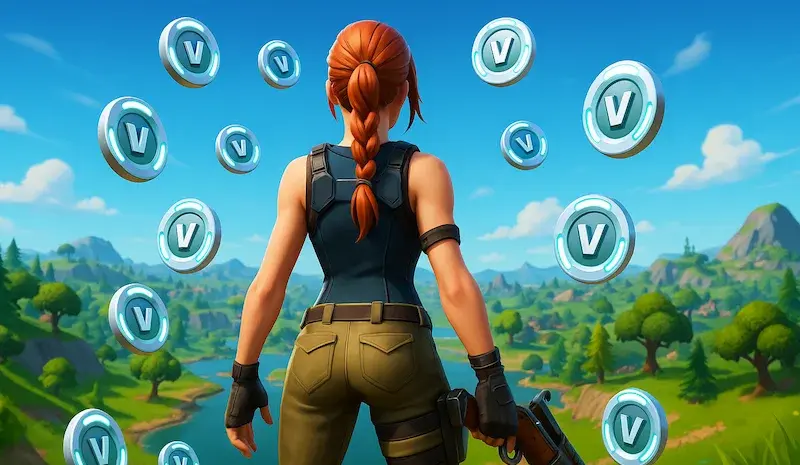
Fortnite’s economy revolves around cosmetic purchases through V-Bucks. The game pulled roughly US $5.7 billion in 2024, with 110 million monthly active users worldwide. However, most transactions are small — battle passes, skins, and emotes — resulting in a lower per-user spend than gacha or card-pack systems. Its #6 placement reflects massive reach and steady V-Buck turnover rather than high-intensity monetization.
7. Call of Duty (Mobile & Warzone)
Platform: Mobile, Console, PC
Currency: COD Points
COD Mobile contributes an estimated US $1 billion annually, while the combined franchise exceeds US $30 billion lifetime.
Spending intensity remains solid due to regular content drops, event passes, and weapon blueprints that require COD Points. Although its per-player spend trails gacha and sports titles, the sheer size of its cross-platform user base sustains strong total currency turnover.
8. Clash of Clans
Platform: Mobile
Currency: Gems
Now more than a decade old, Clash of Clans maintains high engagement and a predictable premium-currency economy. Gems allow players to speed up progress and are purchased heavily during clan wars and update cycles. According to Business of Apps, the game generated around US $355 million in 2024.
While fewer new players enter the economy, veteran payers maintain steady recurring spending, justifying its continued inclusion.
9. League of Legends
Platform: PC
Currency: Riot Points (RP)
League’s monetization centers on skins, prestige items, and event passes. Global player counts remain strong — around 150 million monthly active users — and Riot’s annual revenue hovers near US $1.8 billion (Priori Data). Despite a purely cosmetic model, consistent skin releases and esports events drive a steady flow of RP purchases. Its #9 position reflects moderate per-player spend offset by scale and longevity.
10. Mobile Legends: Bang Bang
Platform: Mobile
Currency: Diamonds
Southeast Asia’s dominant MOBA, Mobile Legends: Bang Bang, remains a revenue leader in the region — with reports showing a 6% revenue uplift in 2024 and consistent top-rank performance in SEA. (Sensor Tower).
Affordable in-game pricing and frequent collaboration events fuel continuous Diamond purchases, making it a steady contender for high currency-purchase volume despite lower per-user spend than some global giants.”
Why are these games so popular for in-game currency purchases?
Several patterns separate high-volume currency games from titles with minimal spending:
- Large competitive player bases create social pressure to own rare items or stay up to date with meta changes. When millions play the same game, cosmetics become status symbols
- Frequent content updates give players reasons to spend regularly rather than making one-time purchases. Games like Fortnite and Genshin Impact release new items every few weeks
- Social status and rare cosmetics matter more in games with strong community elements. Limited-edition skins signal both taste and investment
- Time-saving matters most in competitive or grindy games. Players with limited time but disposable income gladly pay to skip farming or unlock characters immediately
What can you actually buy? Types of in-game currency and items
Different games offer different spending options, though most fall into predictable categories:
- Cosmetic items – Character skins, weapon finishes, emotes, and avatar accessories make up the majority of purchases. These don’t affect gameplay, but let you express yourself or show off rare collections
- Progression boosters – Battle passes, XP multipliers, resource packs, and time skips that speed up advancement without directly buying power in most games
- Gacha pulls and loot boxes – Currency spent on randomized rewards, with rare items requiring multiple purchases. This system dominates mobile RPGs and card games
- Gameplay advantages – Better weapons, stronger characters, or stat boosts. Games with direct power purchases often get labeled “pay-to-win” by communities
- Premium subscriptions – Services like Fortnite Crew or Genshin’s Welkin Moon provide daily currency plus exclusive perks, offering better value for regular players
How much do people spend on in-game currency?
Spending varies wildly based on game type, region, and player commitment. Casual players might spend $5-20 monthly on battle passes or small currency packs, covering seasonal content without breaking the bank.
Dedicated players often spend $50-100 monthly to stay current with all content releases. Competitive players or collectors can easily exceed $200 monthly during major events or character releases.
Mobile games typically see higher per-user spending than PC or console titles due to lower entry barriers and more aggressive monetization. According to SensorTower’s revenue reports, top mobile games generate billions annually from in-app purchases.
Regional differences matter significantly. A $10 currency pack in the US might cost $3-5 in Southeast Asia or Latin America through local pricing. Players sometimes use VPNs to access cheaper regional stores, though this violates most terms of service.
Gacha games show the highest spending variance. Some players spend nothing and rely on free currency, while “whales” drop thousands monthly chasing rare characters. The pity system mechanics create predictable spending thresholds that publishers optimize ruthlessly.
Safe ways to buy in-game currency in 2025
Buying currency comes with risks ranging from scams to account penalties. Official stores through the game developer remain the safest option. You’ll pay full price but avoid any risk of account action or fraud.
Platform stores like Steam, PlayStation Store, or App Store add another layer of buyer protection. These platforms handle refunds and disputes more reliably than direct transactions.
Third-party marketplaces offer discounted currency or region-locked deals but require more caution. Stick to established platforms with escrow systems and verified sellers rather than random Discord contacts or forum posts.
Common scams to watch for:
- Fake currency generators promise free currency but steal account credentials
- Phishing sites mimic official stores to capture payment information
- Sellers who disappear after receiving payment without delivering the currency
- Account sharing schemes where sellers access your account directly, triggering security flags
Practical safety tips:
- Choose verified marketplaces with buyer protection and escrow systems
- Use secure payment methods like PayPal or credit cards with fraud protection
- Never share account passwords with sellers or third parties
- Read seller reviews and community feedback before purchasing
- Enable two-factor authentication on all gaming accounts
- Use unique passwords for gaming accounts, separate from email or banking
For additional guidance on secure transactions, check out how to buy items and game currency safely.
Some games explicitly prohibit third-party currency purchases in their terms of service. Violations could result in temporary suspensions or permanent bans, though enforcement typically targets sellers rather than buyers. Understanding TradeShield buying protections can help minimize risks when using third-party platforms.

Community insight: What do players say about buying in-game currency?
Gaming communities have mixed feelings about currency purchases. Most players accept cosmetic-only currencies as fair monetization. The general consensus on r/gaming and Discord is “if it doesn’t affect gameplay, spend if you want.”
Pay-to-win systems generate significant backlash. Players on Reddit and game-specific subreddits frequently complain about mobile games or MMOs where spending money creates competitive advantages that skill alone can’t overcome.
The biggest concern across all communities is scams and account security. Players share stories about losing accounts to phishing sites or getting banned after buying discounted currency from sketchy sellers. Experienced players consistently emphasize using official stores or verified marketplaces with escrow protection.
Budget management comes up frequently, too. Many players on r/GameDeals admit spending more than intended on gacha pulls or limited-time items, with some advocating for strict monthly budgets to avoid overspending.
Buying and selling in-game currency on Eldorado.gg
For players looking to buy currency across multiple titles, Eldorado.gg connects buyers with verified sellers through an escrow system. The platform covers most major games, including Fortnite, Call of Duty, Roblox, and dozens of others.
Eldorado provides 24/7 support and buyer protection, including money-back guarantees when transactions don’t go as planned. The verification system for sellers helps filter out scammers and unreliable providers.
Whether you’re buying or selling, the escrow system holds payments until both parties confirm the transaction has been completed successfully, reducing the risk of fraud on either side.


