 Glen Schofield is an industry veteran best known as the creator of Dead Space and co-founder of Sledgehammer Games, where he led Call of Duty: Modern Warfare 3, Advanced Warfare, and WWII. Across a 35-year career spanning 50 titles, he has built studios like Visceral Games and Striking Distance, shipping blockbusters that generated billions in revenue.
In an exclusive interview with Eldorado.gg, Glen shared a blunt assessment of the modern gaming industry, explaining why passion-driven blockbuster development had stalled in favor of risk-averse corporate accounting.
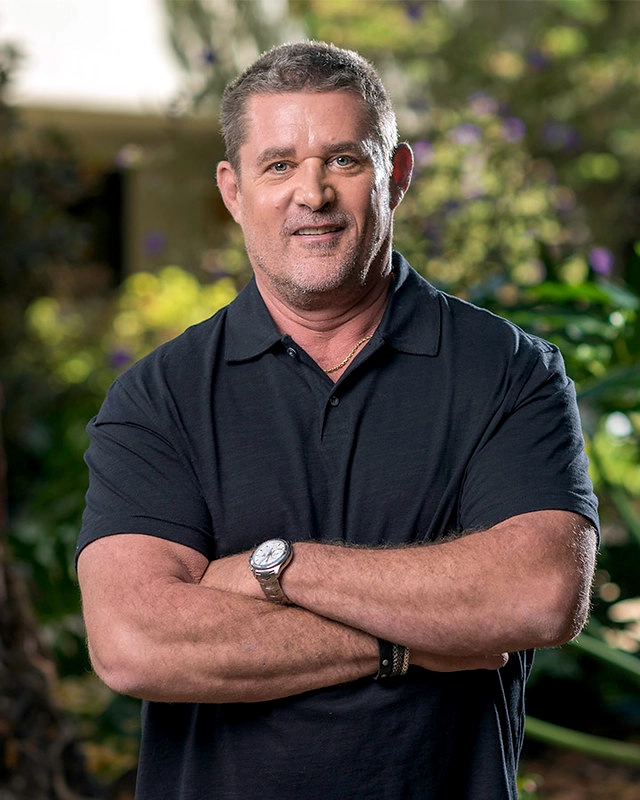
Glen Schofield
Reflecting on the aftermath of the post-COVID investment boom, he warned that publisher fear and oversaturated platforms were stifling true innovation. “I’m not hearing ‘Halo 5 is coming out’ or a big blockbuster like Horizon Zero Dawn,” Schofield explained. “They’re just not making them because they think… they’re scared to death because the creative people are going to f*** up.”
Schofield detailed how modern investors finance schedules rather than ideas, demanding smaller budgets without understanding the creative process, arguing that forcing creators into rigid $10 million limits or retreating to 2D indie titles missed what made AAA blockbusters succeed in the first place.
“It starts with an idea, it doesn’t start with a budget,” Schofield said. “They’ve lost sight of that… The biggest thing to me is the idea. You finance an idea. You don’t finance a schedule.”
Key takeaways from the interview
- The $10M funding wall: Glen reveals how investors now demand developers scale down pitches to under $10M, killing original $70M blockbuster concepts regardless of quality.
- The post-COVID market crash: Glen dissects how pandemic overinvestment created $200M AAA failures and an oversaturated Steam market where 14,000 annual releases drown out great games.
- Wild west industry deals: Glen recalls how early gaming thrived on high-stakes passion, from paying team bonuses with guitars at Crystal Dynamics to pitching Xbox launch titles directly to Jay Allard.
- Budget-first development: Glen hits out at publishers for financing rigid schedules rather than creative ideas, retreating into cheap 2D titles under the false belief that graphics no longer matter.
- AI as an artist’s tool: Glen opens up about using Midjourney and custom apps to build tens of thousands of visual assets after decades of late-night painting during AAA projects.
Full interview with Glen Schofield
Q: You seem much more focused on fine art these days. Are you looking to do more art in games, or are you stepping back from active game development?
GS: “So, I guess at the end of 2023, I went out with a VC company and my agent – who’s a big one – and we went out with one of my ideas. But that was just the beginning of budget cuts and everything.
We went out, and I met everybody, and we spent five months trying to sell it. I had one company come back five times. But at the end of the day, everybody was just concerned with price. It was a bigger game, $70 million, which is a lot cheaper than some of the games I’ve made, but everybody said, ‘No, it’s got to be under $20 [million].’ Then it came down to $15 [million], then under $10 million. It was just getting ridiculous, because I can’t make that game for that.
I went out with another idea with my daughter. She has a great freaking idea for a game under $10 million. It is a brand new idea, and it should be made, but we were having trouble, and then she got a job. So we went out with that, and if I went out with it now, I bet we could sell it.
Hitting the road and doing that kind of thing… I was doing that for a while. I get a lot of stuff from fans, colleagues, and people just joining the industry asking for advice or all kinds of things. I had a couple of deals I was working on as well, and that’s what my career has really been about: deals. Is this one going to go through? Are you going to get the money for the game you want to make? You have to make the deals, and you’ve got to get the teams together. I started out as a freelance illustrator in New York City, so I’m used to making deals. At this point in my career, they got real big and involved a lot of people. So with some of them, I’m just letting go, and yeah, I’m slowing down from video games.
Back three months ago, I had back surgery, and you asked about doing art. I’m a professional artist. Almost every single night when I was making games, I would come home and paint for an hour or two later in the night. It gave me a chance to unwind and think about my games, because when you’re directing, you’re thinking 24/7. Looking back, that was 35 years of painting almost every night, and you end up becoming pretty darn good and fast. My first degree was in art, so I’m settling back into that.
I would love to be part of the new generation, and I’ve actually been working in AI for four years. I wrote a little app the other day to help out a friend’s video game, and I have tens of thousands of pieces I’ve created in Midjourney; it could be 50,000 files of creatures, worlds, and everything. My entire pitches are just graphics, everything from pickups to full environments. That’s what my whole life trained me for, to be an illustrator studying the greats like Frank Frazetta and Boris.
I’ve been creating worlds my whole life, from freelance jobs to working on Adventures of the Galaxy Rangers, where I started as an assistant character creator and made character designs over 65 episodes. Then they promoted me to start directing the storyboards, reading 400-page scripts and sketching them out. My whole life has been art and creativity, so now I’m spending more time on my art in my studio where I build stuff.”
Q: Are game deals much harder and more complicated to close today than they were 15 years ago?
GS: “I’ve always made some crazy deals. Trying to get Sledgehammer made took a long time, working with a friend of mine at Activision to get that deal done.
To get the Dead Space deal done was crazy. It’s not just like, ‘Yeah, go make your game, Glen.’ There’s a lot that goes on in between. At Crystal Dynamics, it was the Wild West. The game industry was starting to really heat up, but we didn’t always have the money. I remember paying one of my guy’s bonuses with a guitar – just a really nice guitar, right? It was easier for us to get gifts and give them out, so I did things like that, or sent one person to Japan so she could study with her sensei for two weeks. So these deals were complicated, and I liked them that way. I like a long shot. My whole career has been a long shot, right?”
Q: How was the transition into directing major titles like Call of Duty, considering your heavy artistic background?
GS: “I wrote and directed them. I always had a really good art director, but I was the art director too. I would tell them, ‘This is what I’m looking for, this is what I want,’ and hope they came back with something better, and they usually did. But yeah, I held the vision.
After Dead Space, they promoted me to run Redwood Shores Studios, and I changed it to Visceral Games. I’ve always been a leader, whether I played baseball or football, I was a captain. I was just more outgoing than a lot of artists. But I constantly practiced my craft. Since I’ve been doing this since I was four years old, I know all about art direction, color, composition, and all the rules. I know how to break them and where to break them, so now I’m just trying different mediums and having fun.
Early on at Absolute Entertainment, I worked on so many games as a senior artist and then art director. We went from 12 people to about 150, and then went public back in 1992 or 1993. Being one of the original 12, they brought me in on deciding what color paint to buy for the office, so I learned what it took to build a company.
Capcom then hired me as art director for Capcom America. Truth is, I was actually the first person hired besides my boss and the vice president who came over from Japan. Can you imagine getting that job? It was like, ‘Okay, Glen, set up a new studio.’ I was an artist, but I started producing and built a couple of small teams, hiring my first writer and designer there. I didn’t even know how to hire people yet.
Then I went to Crystal Dynamics, and they made me a director right away. I took over the Gex 2 team and said, ‘Okay, we’re going to start over.’ They had great technology, but the art wasn’t there, which was right up my alley. I did some artwork on that game, including a background or two and the Christmas level. I also worked on a crazy game called Akuji the Heartless, which was just rivers of blood and lava.
That was when I stopped doing in-game art directly, because I started directing two games at once at Crystal. While I was directing Blood Omen 2, I was also directing Gex 3 and Mad Dash Racing, which was a launch title for the original Xbox.
Sometimes I think about being a launch title for the original Xbox – there were only about nine titles. Two years before the Xbox was announced, my boss flew up to Washington to sell the idea, but Microsoft initially said no. When he came back, I said, ‘Get me a half hour. Just get me a half hour.’ When someone else tries to explain your idea, it’s different than when you speak with passion.
I went up there and met Jay Allard, Seamus Blackley, and the people who started Xbox. After an hour and a half, Jay Allard said, ‘You’re going to make this game.’ I spoke at that original press conference as a young man, and I was terrified. The representatives for the nine launch games spoke: I followed Louis Castle, and Hideo Kojima was behind me. I didn’t even know who Kojima was at the time, but he was wearing black sunglasses, dressed in all black, and had four women in black with him. Being part of that era was pretty neat.
I was also at Capcom during the Japanese console wars when Sony was about to announce the PlayStation. Choosing who to go with was a big deal. We picked Sega at first, and then a couple of months later went back to Sony. I was in some weird, cool places at pivotal times.”
Q: Developers often say games are no longer passion-driven. What changed in the industry that stopped these organic, creative deals from happening?
GS: “When I started out, creative people didn’t have much of a say. Over time, executives learned that they had to follow creative people because when creatives execute their ideas, they turn out great. My goal throughout my career wasn’t to make a ton of money – it was creative autonomy. Just leave me alone, and I’ll make you something great.
When EA hired me as an executive producer after I finished six games at Crystal, they told me, ‘You’ve got to earn your dues.’ I stepped up to the big leagues and doubled down on passion for the creative side.
What happened recently is that COVID hit, and investors pummeled money into games because everybody was staying home buying games. As we came out of COVID and people returned to their normal lives, spending shifted. I did a quick study on this: normally, the market saw about 30 to 35 AAA games released per year, with 60% coming out before the holidays and 40% after.
Right after COVID, money was pumped in, and publishers handed director roles to people prematurely, saying, ‘You were a lead designer once, we’re going to make you director.’ That’s a massive job, and for a bunch of those choices, I knew it wasn’t going to work. They spent so much money and suffered massive failures because suddenly publishers were pumping out 50 new games at Christmas. The market couldn’t handle that, leading to lopsided losses on $200 million budgets.
During the last 25 years, look at Halo or Gears of War; so many great games came out because publishers listened to creative people. It starts with an idea, not a budget. These days, everything is budget-first. Last year, 14,000 games came out on Steam. You talk about oversaturation and splintering fanbases; that’s how you do it. Players don’t know where to look anymore.
I’m not hearing ‘Halo 5 is coming out’ or seeing big blockbusters like Horizon Zero Dawn. Publishers are scared to death because they think creative people are going to f*** up. They are terrified because they don’t know how to pick a creative person or evaluate a good idea.
Instead, they tell you, ‘I have $10 million. I need you to make this game in two years, and it better be good.’ You cannot restrict budget, schedule, and quality all at once – you have to give the development team freedom on at least one of those.
I see so many people showing off 2D side-scrollers, claiming players don’t care about graphics anymore and only care about gameplay. That’s bs. Are you telling me Call of Duty, Dead Space, or any of my AAA games didn’t have gameplay? Of course they had gameplay. When a new console launches, it isn’t indie games driving adoption – it’s the massive AAA titles that push technical boundaries and build the tools the rest of the industry eventually uses.
Publishers have lost sight of that. It’s cyclical, but the biggest issue is that you must finance an idea, not a schedule. Everyone right now is rushing to find the next mechanic that sold 13 million units on a $10 million budget. Graphics matter, scale matters, and above all, the idea matters.”
Exclusive Eldorado.gg interviews with industry insiders
Check exclusive Eldorado.gg interviews about gaming from industry insiders:
- Interview with Jay Klaitz, a voice actor of GTA’s Lester Crest.
- Interview with Alex Hutchinson, a former Assassin’s Creed developer.
- Interview with Joe Rubino, former Rockstar developer
- Interview with Matt Freedman, former GTA 5, RDR2, and Max Payne 3 developer.