 Alex Hutchinson, former Ubisoft creative director on Assassin’s Creed 3 and Far Cry 4, thinks it’s a dangerous time to be a game developer. His latest game with Raccoon Logic, Revenge of the Savage Planet, had a good player base but still struggled financially.
“We’ve had millions and millions of players, but not the amount of income that we would have had historically with the same numbers that we’re seeing,” Alex told Eldorado.gg in an exclusive interview.
“I think the market has moved a little bit closer to the music industry, which is very dangerous, where you can have a song that everyone knows that’s had a hundred million plays, and it’s only going to make you $3,000.”
Game Pass, discounts, and the problem with modern monetization
He adds that a lot of the money is going to a small number of companies, especially with the Xbox Game Pass, where Revenge of the Savage Planet is available. “So even though the industry is making a lot of money, the developers, just like the musicians, are not necessarily making a lot of money.”
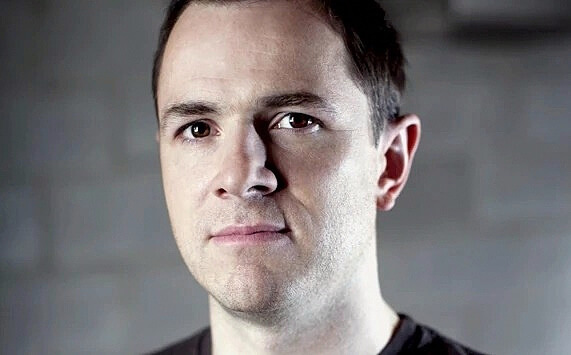
Alex Hutchinson
Alex agrees with other developers who say new games are competing with players’ backlogs, and that the cost of development is higher, while pressure to lower game prices is also growing.
“Wishlists on Steam are bookmarks to wait for something to be 90% off,” he said. “The days of even 500,000 wishlists translating to 200,000 sales are just gone.”
Day-one subscription hurts single-player games
He also thinks Game Pass is a great service as a whole, but including a single-player, finishable game on any subscription service since day one makes no sense today.
“We need to give a window to games for them to sell,” he explains. “Otherwise, over time you’re going to lose more and more developers, or they’re going to switch to the kind of games where they’re packed with microtransactions or other ways of monetizing.”
He says that Microsoft removing Call of Duty out of Game Pass day one hints at such struggles even for big companies. “That tells you is that the amount of money they’re making just because of the cost of development versus increase in subscribers doesn’t math,” he said.
Xbox needs exclusives to compete with PlayStation
Alex believes developers and Xbox can work together so that Microsoft can continue recovering its gaming brand while ensuring studios making good games can do so sustainably.
“If they want great content, they need to pay for great content,” Alex said about Microsoft, emphasizing how some indie studios can make a lot without much investment. “Finding some partner studios to work with for them to give them maybe pay for an exclusive so that you have a reason to prioritize Xbox. I would be shocked if half of the games moving forward are not Xbox exclusives.”
Why Xbox’s next console is less important than its games
While Xbox is already teasing its next console, Project Helix, Alex believes the way the brand recovers its spot in the market is through software, not revolutionizing in hardware.
“The hardware doesn’t matter as much as people would like to,” he says, explaining that a console like what the Switch 2 is for Nintendo would already be good. “Why on earth would I not want just a more powerful Switch? That’s the right decision. Making something weird that no one supports, like the Wii U, doesn’t work.”
Alex would return to work on Far Cry
Developing a new Far Cry is another kind of project that would make Alex go back to the big players in the gaming industry.
“That was always one that I really enjoyed making,” he said. “But the tiring part is that they’re so political and there’s so many people involved. You know, it’s like making a Marvel movie. They’re fun, and they’re a roller coaster, and they’re big, but it’s draining to spend half your time defending or selling a decision instead of just making the game.”
What might be going wrong with Far Cry 7
Unfortunately for Alex and other Far Cry fans, recent reports by Insider Gaming indicate that Far Cry 7’s development is in trouble and could be delayed. When asked about his analysis of this report, Alex believes Ubisoft is going through internal problems, such as building consensus about what the game should be and not letting it change, rather than waiting for something external to take place.
“The thing that destroys projects the most in video games is trash,” he explains. You have an idea and either an executive or someone on the team comes back and says, ‘let’s change it.’ You spend years trying alternate versions of the same idea, then you realize, at the end of that, you haven’t gone forward at all. You’ve just gone around in a circle. And I think that’s often what paralyzes big developments.”

Far Cry 7 is rumored to be set in rural, cold, and remote Alaska or New England
Why big game projects get stuck in development loops
He adds that studio executives often fail to understand that prototypes and unfinished assets are not part of the final product, which leads to unnecessary change requests.
“You can get into really dodgy sort of patterns with that,” Alex says. “You need strong leadership to push through and keep a cohesive, consistent vision, and then you can make something.”
He explained that this is exactly what happened in the development of the canceled Pioneer project at Ubisoft, where the team presented an idea for a small space game while executives wanted it to be bigger, have single player, and include more features.
“And then we came back, and they would say, ‘well, there hasn’t been a lot of progress.’ And we said, ‘you just asked us to change it all. So that’s what we’ve been doing,’” Alex says. “They start to look at newer games as problematic, but they need to stick with what got them there and back a few of these new IPs.”
Ubisoft’s strength is new worlds and new IPs
The ability to create and support completely new games, characters, and worlds is exactly what Alex believes is Ubisoft’s strength.
“EA buys IPs, Valve buys IPs. [Ubisoft is] a big company that allowed creatives time and space to try, and they were very supportive when I was there, mostly right up until the end, of new IPs and new things,” Alex said. “They’ve actually struggled because of that to iterate as much and get into a yearly cadence with certain games, whereas EA is a business, and it can get games out every year, but it’s very impatient with new IPs, which is why it’s often difficult there.”
Another Assassin’s Creed wouldn’t be off the table
Despite the struggles of being an indie developer, Alex is happy and not actively looking to return to the AAA industry, even though he said he’d think about it if Ubisoft invited him to work on a new Assassin’s Creed.
“I would love to do an Assassin’s Creed set in India during the Raj. I think that would be awesome,” he said. “So if they’re willing to give that a role, I would. But also, it’s a different company to when I was there. It’s not the same group of people.”
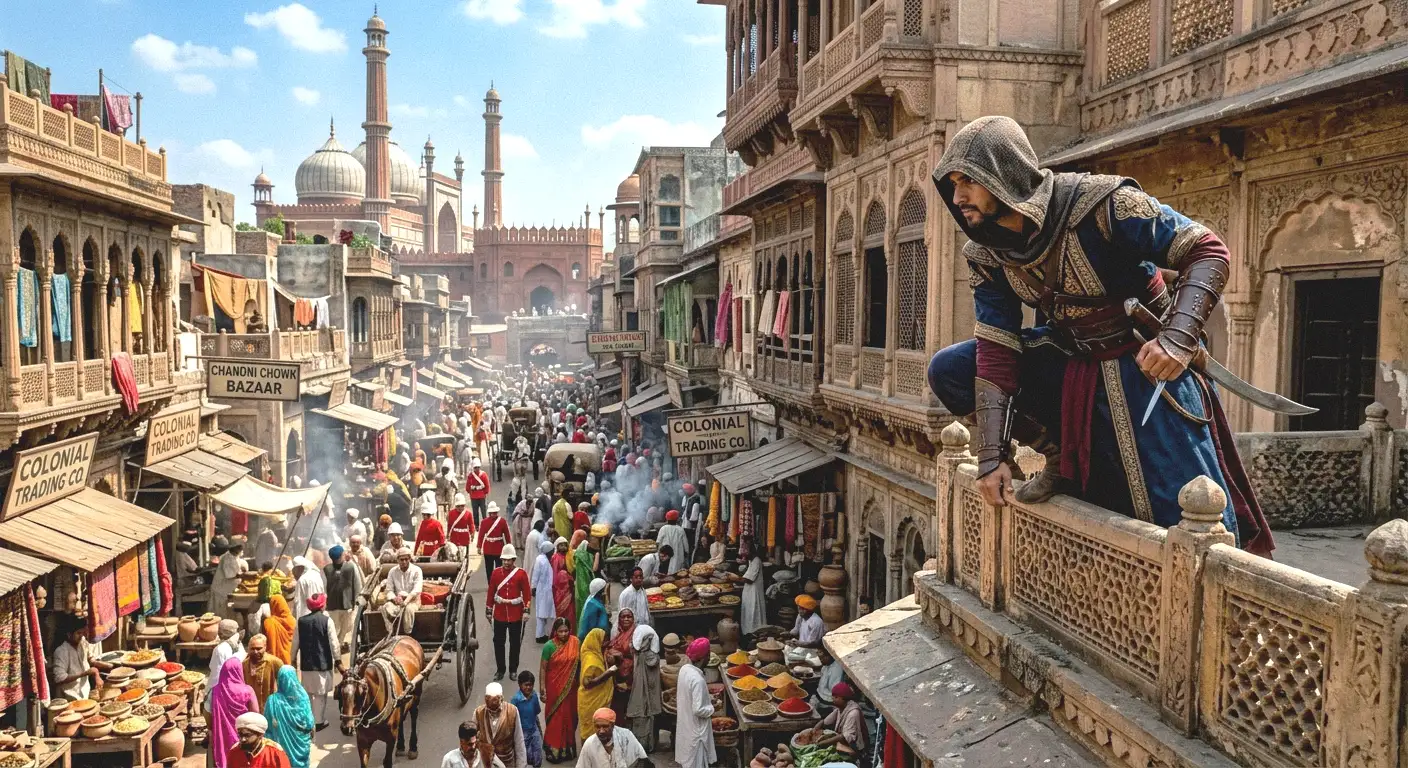
Assassin’s Creed set in India during the British Raj
When asked where else he’d take AC to, Alex remembers he was misquoted years ago, when he would have said that Japan was a bad setting.
“It wasn’t that, it was that it’s a setting that other games can utilize,” he says, “I mean, there are heaps of games set in Japan. I think the fun thing about Assassin’s Creed is you can take it anywhere. So no, that’s the one I was always stewing on. Somewhere in South America, maybe, Mayan or Incan would be fun, as well as Toltec, as well as India.”
He also believes it’s a great franchise with a lot of room for innovation. “Assassin’s Creed has an assassin at its heart, it has a conspiracy or a mystery at its heart. It’s an open world exploration game, but you can take it any time period and change the character.”
Assassin’s Creed shouldn’t become a live-service game
However, one limit Alex wouldn’t go past is ditching the standalone story formula to go for a live service game.
“I’m not a big fan of games as a service. I think they’re designed to suck time and money out of people,” he says. It’s a funny way to think about it, but you could look at Madden or any series as a game as a service. It just ships with a one-time fee every year for Madden or every couple of years for Assassin’s Creed. So I think it already operates similarly.”
Can $100 games become the new normal?
In a world where consoles and video games are getting more expensive, with rumors saying GTA 6 could cost as much as $100 for the base game, Alex says he can’t imagine players buying an AC game for that price.
“I don’t think that’s evidence that people would do that for many games,” he explains. “You try to get more money out of people as it goes forward. Games were $60 20 years ago, and they would cost $10 million to make. Now, games are $80, and they cost $200 million to make. The cost of development has risen far faster than the cost of purchase, and that’s even before you wait for discounts. So, you know something has to give. Either we have to find cheaper ways of doing things, people have to accept smaller games, or the price has to go up.”

The Elder Scrolls games follow a formula, and that’s OK
Aside from Rockstar, Bethesda is another company players are putting huge expectations on an upcoming game, Elder Scrolls 6. Alex believes the key for Bethesda devs to succeed is to filter out the noise and focus on what makes the franchise good.
“It’s always funny to me when people complain about the formula because that’s what it is. That’s why it’s called Elder Scrolls. Buy another game if you want it to be different,” Alex says.
“But I think you just need to know what you’re building with Bethesda. The main stories are always weak, but the side stories are great, and the scale is great, and the sense of exploration is great.”
Why GTA VI is more likely to succeed than fail
GTA VI, on the other hand, probably won’t fail up front, according to him. “It’s going to do a billion dollars. They’re not that worried about it, and it’s more dangerous to get it wrong by rushing it than it is to spend an extra $100 million.”
“Now that a lot of key people have left, I’d be curious if the story has the same tone,” Alex said about GTA VI. “That’s the only way I could see it not having, you know, as big an impact is the tone, and if they don’t get the tone right. But I don’t know who has picked up the reins on that. So it could very well be a non-issue.”

Moving forward with Raccoon Logic
Alex and Raccoon Logic consider Revenge of the Savage Planet a complete project that’s officially shelved. The team is on the prototyping stage of their next game.
“It’s a bit of a departure for us,” he says. “One interesting thing about the industry is that every time you ship, you feel like you ship into a completely different business. It changes so much so quickly. So I think with the rise of streaming or subscription services and the huge amount of price pressure that’s on things, I think we need to find new ways to get people in, new ways to monetize, and actually make enough money to make more games. So it’ll probably surprise a few people when we announce it.”