 Marcus Graham, former Twitch Director of Creator Development, revealed that co-streaming was born from an unapproved workaround involving PlayStation, accusing publishers like Riot and Blizzard of slowing industry growth by chasing traditional sports rights models.
Speaking exclusively to Eldorado.gg on the evolution of live streaming, Graham explained how early corporate hesitation nearly killed the format, which now accounts for roughly half of all esports viewing. He also disclosed how staff ran a covert psy-op via a TwitchCon talent show to force hesitant leadership into approving non-gaming categories like Just Chatting.
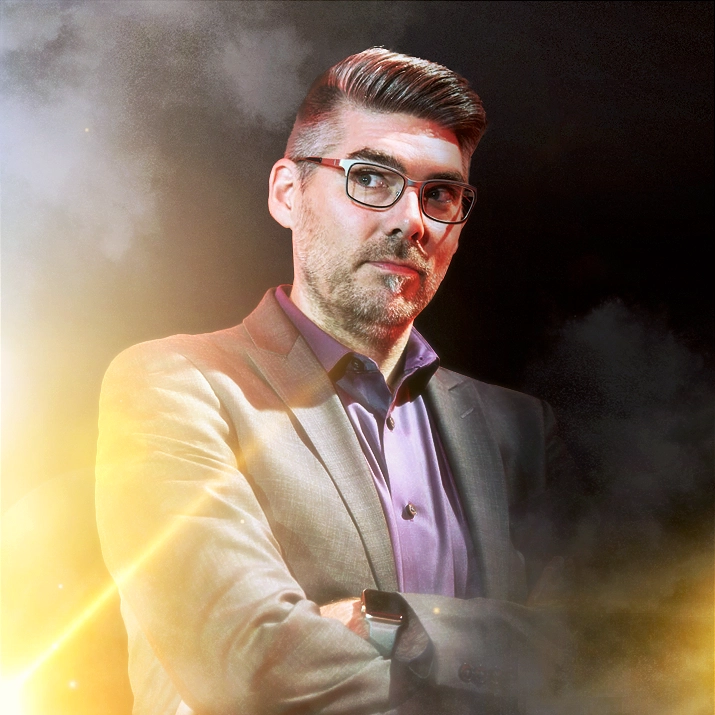
Marcus Graham (djWheat)
The breakthrough for co-streaming came during E3 when Twitch received no response from PlayStation. This led Graham’s team to ask for forgiveness rather than permission by securing main broadcast rights and letting creators restream Twitch’s channel: a technical loophole that bypassed individual publisher approvals and fundamentally reshaped modern games marketing.
Key takeaways
- Co-streaming was established through an intentional loophole during E3 after Sony failed to give official permission, forcing Twitch to adopt a policy of asking for forgiveness rather than permission.
- Esports organizations and publishers like Riot, Blizzard, ESL, and DreamHack delayed co-streaming adoption by incorrectly trying to replicate traditional sports broadcast rights models.
- Broad adoption of co-streaming directly influenced modern games marketing strategies, giving rise to digital showcases like Nintendo Direct and PlayStation State of Play.
- Twitch leadership originally resisted expanding into non-gaming content due to brand and revenue concerns, requiring internal staff to run a talent show at TwitchCon as a proof of concept.
Full interview with Marcus Graham
Q: It is interesting how relevant influencers have become for esports compared to traditional commentators. Stream Hatchet estimates that about half of esports viewing hours last year were on co-streams, which you helped implement on Twitch. Does that number prove esports organizations spent too long trying to optimize for a traditional sports structure rather than personalities?
MG: Yeah, absolutely. I think one of the biggest stumbles of esports was oftentimes not recognizing that, in and of itself, it is such a unique thing. Sure, there are many parallels that you can make between sports and esports. We exist because sports exists. But at the same time, I do think that there have been moments during esports’ lifetime where the whole idea and concept of “we can be our own thing” was not necessarily respected.
And I get it. People want to understand how to make esports big and how to make it successful, and it seems really obvious that the answer is, “Why don’t we just do what sports has done?” but there are so many reasons I think that wasn’t going to work.
I’m not going to sit here and say, yeah, in 2015, if esports would have just embraced creators, we’d be in a different place. It’s just not true. Hindsight is 20/20. It’s easy to just say that. But the fact of the matter is that I would say I was pretty early on the train of co-streaming to say, “Hey, people, wake up. This is the future.” But that in and of itself was a completely foreign idea to the industry. People thought I was absolutely insane, crazy to think that people would want to give their content away. It’s not when the goal is to obtain reach.
One of my favorite success stories of streaming isn’t even esports. It’s the Game Awards. I sat down with Geoff Keighley really early on. I said, “This is the future. And if you want to have as many people watching The Game Awards as humanly possible, you put it into the hands of creators. You let them watch alongside you. You’re not going to lose anything. You’re going to gain clips. You’re going to gain all this.” And esports, they slow-rolled into that. And the reason why was because they wanted to try to follow a more traditional model. They thought there was a future where companies were going to pay millions of dollars for the rights to broadcast, when in reality I don’t think that future was ever going to manifest.
Q: Who specifically expected esports to operate like traditional sports, and what were their backgrounds?
MG: That includes publishers like Riot and Blizzard, esports organizations, and tournament organizers that throw these events – and that could include the ESLs of the world, the DreamHacks of the world.
I’m not throwing shade their way because I understand there was a need to create a viable business out of this, but you could see as the adoption trend of co-streaming in the games industry was absolutely blowing up. Esports was a little slow on that uptake. And so “they” represents pretty much anyone who would be in control of what happens with a game or a tournament or whatever. And sometimes that was the publisher; sometimes that was the TO. I think TOs were the first to kind of go, “Hey, if we let these CS creators stream some CS Majors, it could do some good things.” And clearly, the results were there.
Q: Who helped you take the initial steps inside Twitch to make co-streaming standard practice across the industry?
MG: It was PlayStation, and here’s why. PlayStation was not necessarily okay with the idea of co-streaming. At the time, I basically went to all of the major publishers and said, “Hey, listen. This is what we’d like to do. We would like to broadcast the keynotes and all of the presentations from E3 during the thing”.
Sony was kind of like, “I don’t know, we’re not quite sure that we’re down with this at all.” And, of course, younger me is just like, “We’ve already got Microsoft on board and Nintendo’s on board and everything.” And we kind of never heard back from Sony.
At that point, we just said, “We’re going to ask for forgiveness and not permission.” And we did it. And the biggest compliment and/or win was the following year, when they were like, “Hey, are we doing that thing again that we did last year?” That’s how I think co-streaming had to be born. I don’t think anyone was going to say, “Yes, we give you permission.” Because the whole concept of co-streams was like, if we can convince the major players to let Twitch broadcast it, then we as Twitch can say, “Hey creators, you can broadcast our channel.” So in reality, that was the loophole that sort of created co-streaming, and then once people saw the impact of it, it wasn’t questioned again.
Now, I may be a little bit of a narcissist, but I think the reason we have State of Play and things like Nintendo Direct is that these companies truly saw the value that they were getting by presenting content in that way. The Nintendo Direct for the 40th anniversary Zelda just happened, and there were millions of people watching, because people wanted to watch their favorite creator see the Ocarina of Time drop.
That has completely changed game marketing, and Twitch and creators had a big part in that, not necessarily because of any one thing they did, but because of the evolution of creators and companies just saying, “Hey, this is better than spending $10 million and going to E3 for a weekend.”
So, I think going back to your original question, I look at Sony, and I think they played such a major part because they were apprehensive and then immediately were like, “We get it now.”
Q: How does modern content distribution, such as GTA appearing on Netflix, fit into this broader shift towards creators and alternative platforms?
MG: It is, but it’s so fascinating because this could never happen in traditional media. Never in a million years, right? And I think that’s what I was always so drawn to Twitch and internet media, streaming, and that culture, because there is this very unique gray area that exists where I think companies realize that we obtain more reach when we involve the creators, the influencers, and the community and being a part of that reach.
And it is so clear as day. I mean, I was even blown away by Nintendo Direct. I was just watching it yesterday. I didn’t watch it live, but I caught up with it.
I was like, man, they got a full orchestra and did all this sweet-ass music, and it probably cost them a million to make, but way more effective than putting an ad on the side of a bus or putting a traditional commercial on. These are companies that truly understand how to reach their audience.
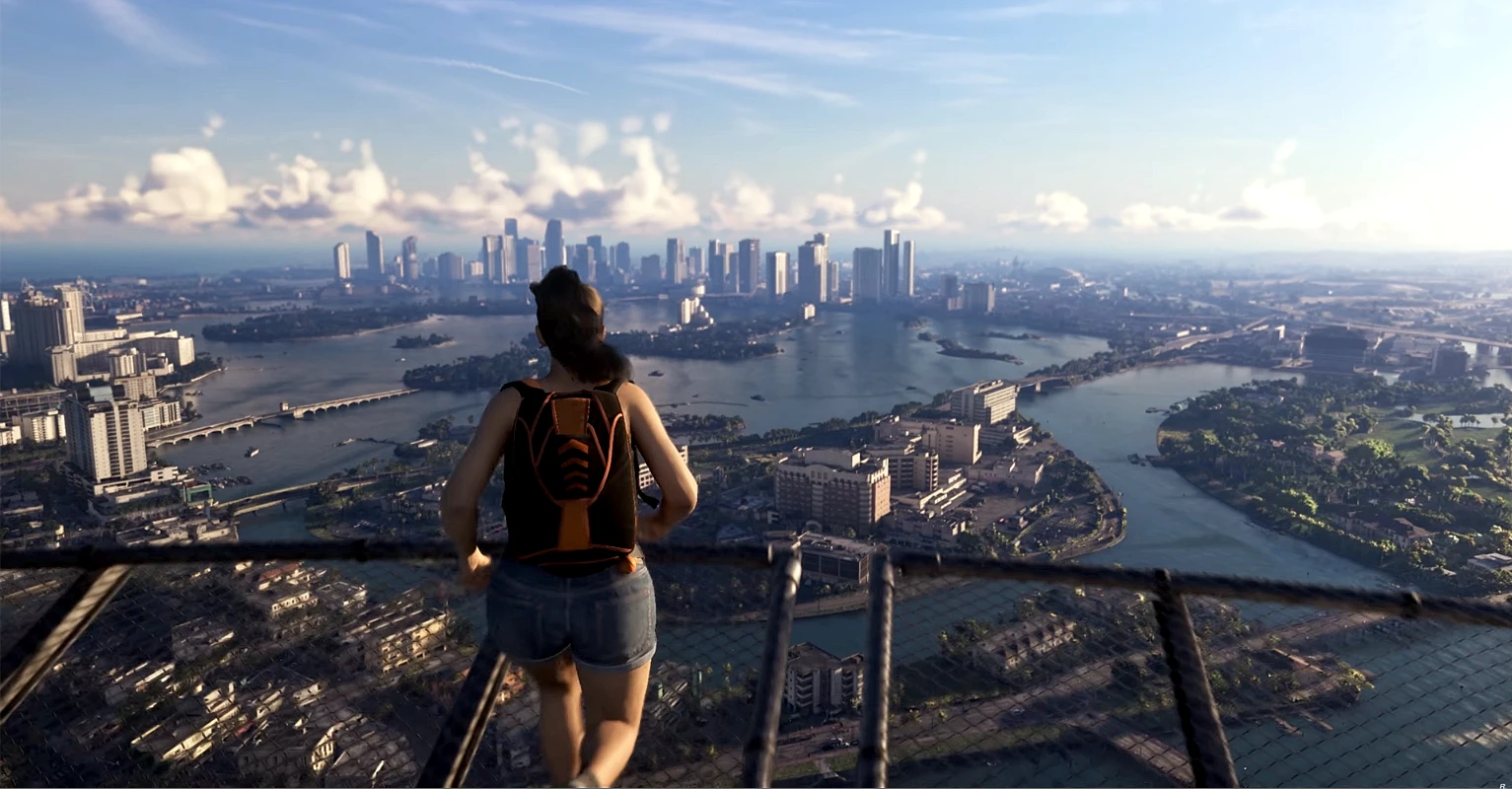
GTA 6 extended look premiered exclusively on Netflix
And part of that is by embracing this massive change that has happened: the idea of content ownership, which is delicate and fragile because it’s sort of all over the place. But understanding that, hey, if we give this to the audiences, to the communities, to the creators, they’re going to do our marketing work for us. Brilliant. Everyone benefits.
And you’re right, if the last 10 years hadn’t been successful in accomplishing exactly that, we wouldn’t have GTA 6 first look on Netflix. And that thing blew the shit up. That was massive.
So I love that the industry has kind of found its way in terms of how that can all coexist, and it seems to work out pretty well, right?
Q: As one of the original creators of TwitchCon, what was the initial vision for the event?
MG: When we first started talking about TwitchCon, it was as early as 2012, and it was way too early to be doing anything.
But the reason why we started thinking about it in 2012 was because that’s when Twitch started going to conventions ourselves. That’s where we started to say, ‘You know what, if we’re going to try to find people to use our site, to want to watch our site, we got to be boots on the ground, right?”
And so our thought was like, why don’t we go to these events? Why don’t we put a bunch of content together and broadcast it live? People can see exactly what our product is.
And after doing that for a year, we all were just sitting around being like, man, wouldn’t it be amazing if we could just make our own version of this where it’s like literally we just put every creator…they are the product. We don’t have an expo hall per se. People come for the creators.
We have all these – for us, TwitchCon was about exactly what we were just talking about before, which is: how do we celebrate the grassroots that has essentially created this site? Because this site is nothing if people aren’t broadcasting on it and people aren’t watching it. And how do we make an experience they’d want to come? We could recognize them. We could do things that we couldn’t do online, that we could only do physically, in person. And that’s what we wanted it to be.
Our goal was, and we would constantly repeat it to ourselves, that we want TwitchCon to be the manifestation of being online watching your favorite Twitch stream, but in person.
And we didn’t know what that was exactly, but we were like, that’s the energy we want to bring. Chat’s a little chaotic, things get a little wild. That should be what we want TwitchCon to do.
And so it was thankfully conventions like PAX, conventions like BlizzCon, conventions even like E3 that really helped us figure out what we ultimately wanted to create for TwitchCon. And I do believe that’s what we ultimately brought to the table for the first time in 2015.
Q: Is there a specific behind-the-scenes moment from the early days of TwitchCon that encapsulates the original community culture?
MG: Yeah. This is one of my favorite stories because–my God, no one would ever approve this in a million years.
So, we did something very early on in 2015 that was basically like the Twitch Hall of Fame, and we only had a couple of things that we nominated. We wanted this to be a big deal.
So the three things that won were Twitch Plays Pokémon. It was such a monumental moment for Twitch, and it really defined what Twitch could be, and we just felt like this moment in time that so many people shared should be recognized.
Lethal Frag, who was kind of the first creator to ever say, “I’m going to do a two-year challenge. I’m going to stream every day for two years.” And he documented it all. And we created this little mini-documentary to sort of recognize him for that.
But the third one was Kappa, because at the time Kappa was still so representative of kind of the weirdness of Twitch and what it represented and how people used it as well.
And who do we get to come talk to accept this award on behalf of Kappa? And I was super bullish, and I said there is only one way that I’m going to do this, and this is how I’m going to do it: I’m gonna put a card randomly under a seat inside of TwitchCon, and when we give this award, I’m gonna ask everyone to look under their seat, and someone is going to find it and come speak on behalf of Kappa.
Holy shit. If you did this today, you’d realize the wrong person could have probably gotten that card and made everyone’s life really miserable. And this kid got the card. He stood up. He went to the front. I was just like, this could be the worst thing that happened in the world.
And at the time there was this meme about Kappa 123, chat Kappa 123, and he just leaned into the mic, and he’s like, “Kappa. Kappa 123. Kappa 123. Thank you,” and he walked off, and everyone just went absolutely nuts and crazy.
And I’m just like, there’s a million ways that it could have gone wrong, right? This was Infinity War, and Dr. Strange is 14 million ways this fucked up really badly for you. There’s one where it goes well.
And I love this story because it shows, at the time, I think, the Twitch community and how they were there in solidarity, not only for one another and as creators, but for Twitch itself.
It wasn’t seen as this corporate behemoth. It was seen as someone who was there on the ground floor with the creators.
And I look at that moment, I think about that moment, and I go like, that was really representative of what the community was like at that time and what it felt like to be a part of that community. And there is no way in hell that would ever happen again today because it’s different. I’m not saying it’s a bad word or whatever, but it’s different. And I think that’s one of those stories that really exemplifies just how different it was.
Q: Has TwitchCon lost its original identity due to controversies over the years, or is that simply the result of leaning into Twitch’s inherent chaos?
MG: Yeah. It’s easy to look back on TwitchCon 2015, ’16, ’17, ’18, and look back at it very fondly in terms of what it was, but it was also changing during that time.
And I would say that it didn’t necessarily change. The event didn’t change. What changed was the growth of the site. What changed was the creators. What changed was the type of content that people were watching. What was the most popular, right?
Keep in mind 2015, ’16, ’17, during an era where just chatting and politics, some of that – even like the roleplay—was way more niche.
And I think TwitchCon has always struggled, even when I was there, with how do you make it better than last year, and how do you do that while also encapsulating everything that the site is now?
It was much easier to do in 2015, right? So it’s not like the event’s fault or the creators’ fault or Twitch’s fault. It’s just a byproduct of the world changing, the site changing, the size of it, the economy, like all sorts of things. You can’t just look at one thing and point and be like, “That’s where it went wrong.” But it’s definitely harder to still, I think, capture the magic that we were able to capture early on. And again, not because they’re doing anything wrong, just because it’s a different world.
People look at Twitch differently, right? People look at creators differently. After 10 years, some of that mystique of meeting your favorite creator has gone down a little bit.
And there’s a million different things, but if I had to put it on one thing, it’s more just the growth of the site, the widespread of the content, and the type of variety that exists, and the fact that there are thousands more creators that are just as big and just as recognizable as there were in the early days, when that could kind of be contained within a whole convention.
Q: When Twitch expanded into Just Chatting and non-gaming categories, was that driven by organic creator growth or internal pressure for revenue?
MG: Actually, most of the internal pressure was that they didn’t want it. We wanted to stick to gaming. I will be the first to admit that I was on the side of, I think that’s a major mistake, because what I saw at this time is around 2016, 2017, when we first started the Creative, and we’re like, there’s definitely something here. And it was not big by any means. It got big once we created Just Chatting and IRL.
So the way that I looked at Twitch was, what I found really fascinating, it was really representative of people coming together and just sharing what they loved. It was more a gathering place of passions, and it just so happened that for a lot of people, gaming was people’s passion.
But one of the reasons I was so for it was: why shouldn’t I be able to broadcast my esports show live on Creative? That’s stupid. Why?
And I was fortunate enough to be able to do that because I was on Twitch staff and I had a free pass, but I’m sitting here going like, this bullshit. It’s not fair. Why wouldn’t we open it up?
Because my thought is, I come on here, I’m playing the newest game, whatever, and someone comes in, and they’re like, “Hey, I see you like Stormlight Archive behind you.” I’m like, “My God, I love Stormlight.” Why wouldn’t we want to promote that interaction? Why wouldn’t we want it to say, “Hey, you know what? It’s okay if you just stop gaming for a second and start talking about something that you love. That’s what happens when you’re building community.”
So, to me, it was like this is a really long story because getting non-gaming content on Twitch was probably the biggest psy-op that we ran while at Twitch, because essentially we used TwitchCon as a vehicle to prove to leadership that it was a good idea to do.
And that was the only way that I knew how to fight back. And myself and Anna Prosser essentially said, “We’re going to do a talent show at TwitchCon.” That’s how we’re going to get it. We’re going to, like, this is an extension of Creative. This is an extension of what people like to do, like playing the piano. That was not allowed at one point on Twitch.
So, there was never revenue pressure. In fact, I think that people were concerned that it could impact revenue, when in reality I’m sitting here being like, “No. More people, more things to talk about, more content types. You categorize it, let it grow, we’re more than gaming.” Thirty million gamers came to use the site, and they’re like, “Hey, you like anime, too. You like Dungeons & Dragons.” Why wouldn’t we want to fully support all of those?
So, there was a lot of internal back and forth on shouldn’t we not do it? And even to this day, I think people are like, “It was the biggest mistake that Twitch ever made.” Maybe it was, right? But it grew the site significantly.
It opened up a lot of people’s opportunities for the type of content to make. They were no longer just game streamers. Suddenly they could be making shows. Suddenly they could be going outside and doing travel blogs. Suddenly there’s so many different examples.
We probably wouldn’t have VTubers if we wouldn’t have allowed that to happen. We wouldn’t have these IRL travel streams.
I can’t pinpoint where it happened or what happened, but it was true. It was never revenue. It was always more like, should this content just be on the site? That was more the conversation.
Q: To clarify, was the internal opposition to expanding beyond gaming coming from leadership rather than the general Twitch team?
MG: They were really concerned about it, yeah. They were just, “That’s not what we built. Our brand is gaming only.” Whether it was the rules around it, which have certainly proved to be the hardest part about opening up content.
But yeah, it was, I would say, indecision by the leadership team that we used TwitchCon to kind of make them go, “You know what? This actually makes a lot of sense. We should do this.”
And that was kind of the start of when that really opened up, because it started with Creative and then it opened up from there, when people started getting really creative about what they were putting in Creative. Why can’t a piano be in Creative, right? Yeah, exactly. Why can’t interpretive dance be in Creative? Exactly. And that was kind of how the explosion into IRL finally ended up happening.
Exclusive Eldorado.gg interviews with industry insiders
Check exclusive Eldorado.gg interviews about gaming from industry insiders:
- Interview with Jay Klaitz, the voice actor of GTA 5’s Lester Crest.
- Interview with Alex Hutchinson, a former Assassin’s Creed creative director.
- Interview with Joe Rubino, a former Rockstar cinematographer.
- Interview with Matt Freedman, a former Rockstar producer on GTA 5, RDR2, and Max Payne 3.
- Interview with Glen Schofield, the creator of Dead Space and co-founder of Sledgehammer Games.