


Even before starting my adventure with Coen in The Blood of Dawnwalker, there was already a lot happening regarding the game. Ex-Witcher developers, big open-world RPG (arguably their bread and butter), unique day/night mechanics, gritty and time-period-accurate approach to the setting, and much more. Yet, with all that buzz came a sense of worry – the hype is certainly there, but will it actually deliver?
Thankfully, having finished the game, I’d say yes, although if you’re looking for something groundbreaking, I can’t say you’ll find it in The Blood of Dawnwalker.
So, what makes Dawnwalker different?
The Witcher comparisons are obviously unavoidable, especially considering Rebel Wolves is made up of numerous former CD Projekt Red developers, including The Witcher 3 director Konrad Tomaszkiewicz. You don’t need to look hard to see that DNA either. Conversations, investigations, quests, and even the general feel of moving through its open world can be very reminiscent of The Witcher 3.
At the same time, open-world RPGs aren’t exactly a genre lacking competition, with some of the best games ever made falling into it. So, what does Dawnwalker actually do differently? Honestly, not much is groundbreaking, but it does have a few ideas of its own and, more importantly, the things it does well, it does really well.
Interestingly, one of its more unique ideas is time.
30 Days
Following the opening, Coen’s family is captured by Brencis, the vampire ruler of Vale Sangora, leaving you with 30 days to save them. You’re essentially given the end goal and then left to figure out how you want to get there. You can go after Brencis’ allies, help others in the hope of gaining their support, improve Coen, or simply explore. The catch is that almost everything costs time.
Thankfully, this isn’t a Majora’s Mask situation with a clock constantly ticking away. Exploring, messing around with your inventory, or simply taking in the world doesn’t move time forward. Instead, quests and certain actions consume specific amounts of it, including training many of Coen’s skills.
Initially, this made me extremely cautious. I even avoided training certain skills because my thinking was basically “why would I waste precious time on this when I need to save Coen’s family?”
It also changed the activities I considered worth doing. Vale Sangora has plenty of smaller pieces of side content which, while perhaps not as interesting or consequential as the larger quests, I would normally still spend time doing in an open-world RPG. Here, knowing that they would eat into the same limited resource as considerably more substantial quests made the choice fairly obvious. Why spend that time on something minor when I could use it on something that seemed far more worthwhile?
In a game without the 30-day limit, I probably would have done all of those activities. Instead, the mechanic encouraged me to prioritize the most substantial content and ignore some of the smaller stuff, essentially shortening my own playthrough in the process.
The strange part is that around 10 to 15 days in, it became obvious that the timer was considerably more generous than I initially thought. I stopped worrying nearly as much about spending time and started training far more of Coen’s abilities, which in turn opened up much more of the combat system.
And this is probably my biggest issue with the mechanic. I understand what it’s trying to achieve, and attaching a cost to quests and other activities certainly makes your decisions about what to pursue more meaningful, but I’m not convinced an open world RPG necessarily benefits from making me constantly judge whether its smaller content is worth my time. Those little distractions are part of the appeal of the genre in the first place, even when they aren’t necessarily the best or most memorable content in the game.
The night is where Dawnwalker comes alive
The actual day and night cycle, however, is a completely different story and easily one of my favorite things about Dawnwalker.
Coen remains human during the day and becomes a vampire at night, and thankfully this goes far beyond simply changing the lighting. During the day you rely on weapons and witchcraft, while nighttime gives you access to Coen’s vampiric abilities and different ways of approaching exploration.
Personally, I found myself gravitating towards vampire Coen. Once more abilities started opening up, there was simply more fun to be had with the vampire side of his moveset. You can mix normal attacks with various vampiric abilities and generally become far more dangerous than the comparatively ordinary man you control during the day.
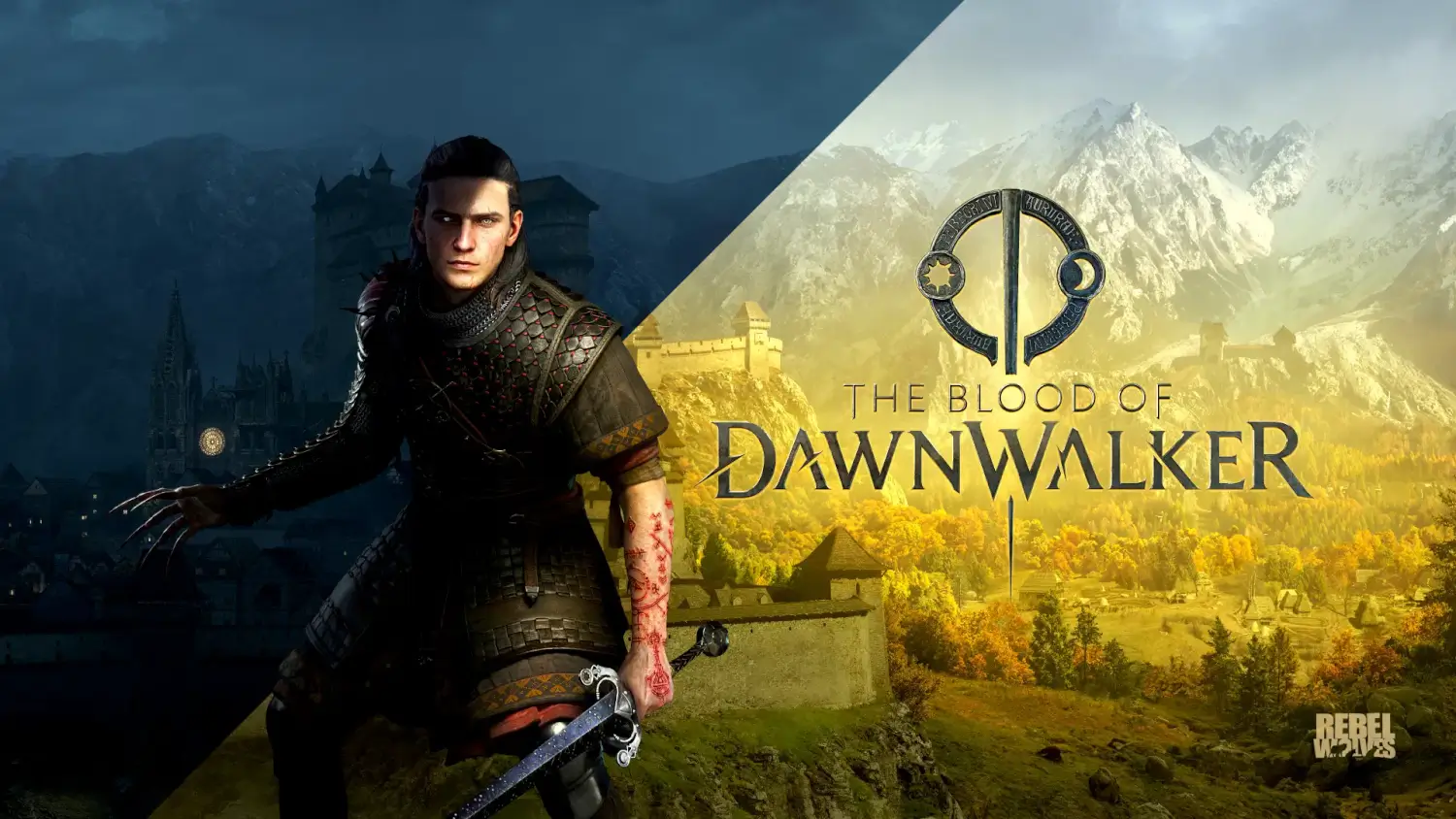 More importantly, the two versions of Coen actually make you think before you act. If I knew I was heading into a quest with a lot of fighting, for example, I’d often rather wait until night simply because vampire Coen is so much stronger. Different abilities and traversal options also mean that approaching the same place during the day or night can be a completely different experience.
There is a downside to being a vampire as well, with Coen needing blood during the night. Ignore that hunger for too long, and it can interfere with conversations, potentially forcing him to feed on somebody you really didn’t want dead. Sadly though, this ended up feeling more like a gimmick than a meaningful mechanic, as after the first few hours managing Coen’s hunger becomes incredibly easy.
It took me a bit to enjoy the combat
Regardless of the time of day, melee combat revolves around directional attacks and blocks. Enemies telegraph where an attack is coming from, and you respond accordingly, while your own attacks can similarly be aimed from different directions. Kingdom Come: Deliverance is probably the easiest comparison, although Dawnwalker’s take is considerably more approachable.
Early on, combat could feel fairly simplistic, although looking back, a lot of that came from how the time mechanic had encouraged me to play. Because I was reluctant to sacrifice hours training Coen, I was mainly relying on the basic directional combat and unknowingly keeping a large part of the system locked away from myself.
Once I realized I had plenty of time and actually started investing in those abilities, combat improved dramatically. Instead of just waiting for someone to swing at me, parrying and then hitting them back, I now had all these other abilities to use between attacks. Especially at night, having a proper selection of vampiric abilities made combat extremely satisfying.
I did have one issue playing on PC, however. Both directional attacks and directional parries need to be controlled during fights, and I found switching between the two awkward with the default mouse and keyboard setup, even after many hours. Eventually I mostly avoided directional attacks and concentrated on directional parrying instead. Friends who played with a controller told me this wasn’t really an issue for them, so this seems to be more of a challenge with the PC control scheme than the combat itself.
Vale Sangora
Outside of combat, Vale Sangora is one of Dawnwalker’s strongest aspects. I’m usually all for massive open worlds, but I think the smaller scale works particularly well here. Rebel Wolves is still a new studio working on a AA game, and rather than trying to match the sheer size of some AAA open-world RPGs, the focus is clearly on making the space it does have feel worthwhile. There’s still plenty to explore, including Svartrau, smaller settlements, forests, mountains, swamps, ruins, and caves, and despite its more contained size, Vale Sangora never felt particularly small while actually playing it.
That scale also works perfectly with the setting. Dawnwalker takes place in 14th-century Europe, and there’s a grittiness to the world that I really appreciated. Villages are muddy, buildings are honestly sad-looking (in a good way), and even the more impressive locations generally feel appropriate for the world they exist in. Obviously, vampires and witchcraft make complete historical accuracy fairly irrelevant, but beneath all the supernatural stuff, there’s a strangely believable late-medieval world.
Visually, though, it’s a slightly different story. The art direction is strong, but on a purely technical level there are plenty of moments where Dawnwalker looks dated. At times I could easily imagine looking at something released around 2016 or 2017 rather than a modern big-budget RPG. This is a AA production rather than something made with the budget of the biggest games in the genre, and normally I wouldn’t have much of an issue with that, although the price becomes important here, which I’ll come back to.
Choice, or the illusion of it?
Quests and characters are also where the experience of the developers behind Dawnwalker becomes particularly obvious, and I mean that as a compliment. What begins as a relatively straightforward task can develop into something much larger, while characters including Anca, Lacra, and rebel leader Crake can lead Coen down substantial paths of their own. Brencis’ fellow Vrakhiri, including Ambrus, Bakir and Xanthe, also aren’t simply bosses sitting around waiting for you to kill them.
I especially liked that the game doesn’t constantly make the “correct” decision obvious. Vale Sangora is filled with people who have done terrible things for understandable reasons and others with seemingly noble intentions who are perfectly willing to do terrible things themselves. There were choices where I genuinely had to stop and consider what I wanted to do rather than immediately spotting the good dialogue option and the evil one.
The problem is that Dawnwalker isn’t always as interested in the consequences of those decisions as it initially makes you believe. There were situations where I spent time considering what seemed like a fairly important choice, only to realize that the different options ultimately led to essentially the same point. The journey there might change slightly, but not always enough to make me feel like my decision had actually mattered.
It doesn’t happen with every choice, but it happened often enough that I wish some of these decisions branched out further rather than eventually converging on similar outcomes.
Still, the story and character writing ended up being some of the strongest parts of the game for me, alongside its atmosphere. I just wish more of the choices actually mattered as much as they initially seemed to.
$70 is a lot to ask
Ultimately, The Blood of Dawnwalker isn’t quite the game that’s going to change open world RPGs, but honestly, it doesn’t need to be. Having finished it, I still came away very positive, and while you can very clearly see where Rebel Wolves’ previous experience has influenced it, there’s enough here that Dawnwalker only sometimes feels like “The Witcher but with vampires.”
There’s also no hiding that this is a AA production. Despite some great art direction and a setting that does an excellent job of capturing that gritty late-medieval atmosphere, visually there are moments where Dawnwalker could easily pass for a game released in the previous decade. Normally that wouldn’t bother me too much, but it becomes harder to ignore when the asking price is around $70.
So, while I’d absolutely recommend The Blood of Dawnwalker to anyone looking for another big, story-driven open-world RPG, I’d still recommend waiting for a discount before jumping in. Not because the game isn’t worth playing – quite the opposite – but because $70 is a lot to ask for what is ultimately a very good AA RPG. It may not be the groundbreaking debut some expected from Rebel Wolves, but it does more than enough to make me want to see what they do next.
Exclusive insights from game industry insiders
Check exclusive Eldorado.gg interviews about gaming from industry insiders:
- Interview with Jay Klaitz, the voice actor of GTA 5’s Lester Crest.
- Interview with Alex Hutchinson, a former Assassin’s Creed creative director.
- Interview with Matt Freedman, a former mission designer on GTA 5, RDR2, and Max Payne 3.
- Interview with Joe Rubino, a former Rockstar developer and virtual cinematography specialist.
- Interview with Glen Schofield, the creator of Dead Space and co-founder of Sledgehammer Games.